


12/08/2025
How to Be a Sporting Parent and Support Your Child’s Sports Journey
If you’ve ever watched Trophy Kids, you know it can feel a bit too real.
The documentary depicts how a few well-meaning parents push their kids in sports so they succeed. But somewhere along the way, things get intense. The pressure builds, the joy fades, and what starts as support slowly turns into stress… for both the parent and the child. It’s not intentional. But it may affect overall sports and child development because instead of playing for the love of the game, kids may start playing out of fear, afraid to disappoint the people cheering them on.
In this blog, we’re sharing a few simple ways parents can support their child’s love for the game without turning it into something stressful:
1. Focusing on Efforts, Not Outcomes
It’s normal to ask questions like “Did you win?” or “How many goals did you score?” after a match. But over time, such questions may shift a child’s focus toward the outcome which, let’s be honest, isn’t always in their hands.
Instead, we suggest trying to cheer for the effort. Because studies in sports and child development (like one from the Journal of Sports Psychology) show that when kids focus more on how they play than just what they scored, they’re more likely to build a growth mindset. In simple terms? They start valuing hard work, learning from mistakes, and getting better over time.
And here’s the surprising bit: when kids feel supported for trying their best (not just for winning), they often end up performing better.
2. Protect Their Mental & Physical Health
Kids might be crazy about the game, but hey, they’re still kids. So yes, they’ll get tired, feel off some days, or just need a break. Because long training sessions or back-to-back matches can wear them out, both physically and emotionally. And since that plays a big role in sports and child development, a little support from your side can really help.
Here’s what our coaches often recommend:
- Make sure they’re getting enough sleep and rest
- Be open to how they’re feeling, especially after a tough game
- Help them eat well and stay hydrated; it makes a real difference
Basically, when kids feel rested and emotionally backed up, they show up better on the pitch too.
Recommended reading on nutrition:
Nutrition plays a big part in football and in overall sports and child development, too. If you’re wondering what your child should eat before, during, or after practice, check out our blog: What to Eat Before, During & After Football Practice for Your Child.
3. Let the Passion Be Theirs, Not Yours
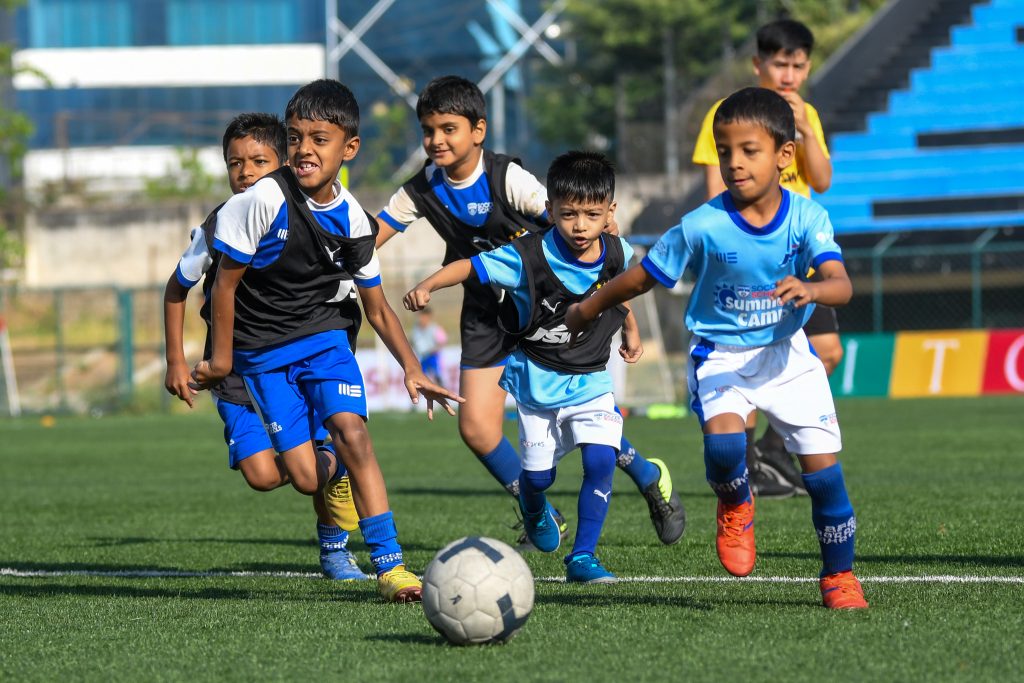
Our football coaches often say they spot two types of players. There are the ones who finish practice and still want to talk about football. And the ones who follow instructions, but you’ll notice them constantly looking to the sidelines, checking if their parents are happy.
It’s not that they don’t enjoy the sport… they just seem more focused on meeting expectations than having fun. That’s where the difference shows up between child-led passion and parent-led pressure.
And the research backs it up.
A study of over 700 young athletes found that when kids felt genuinely supported by their parents, they stayed motivated and enjoyed playing more. But when that support started feeling like pressure, motivation dipped. So at our football academy, we often remind parents: your presence matters, but so does your approach. The right kind of support keeps the game fun, and that’s what helps kids stick with it for the long run.
4. Step Back, But Stay Present
Being supportive doesn’t mean we have to be everywhere, all the time. In fact, one of the best things we can do is find the sweet spot: not too involved, not too distant. Think of it as the Goldilocks Zone of parenting in sports.
Here’s what that might look like:
- Letting your child make their own decisions on the field
- Turning up for matches without hovering on the sidelines
- Checking in on how they’re feeling, not just how they played
- Holding back on giving too many post-game tips or critiques
By stepping back just a little, you give them space to figure things out, build confidence, and truly enjoy the game. And don’t worry… just knowing you’re there to cheer them on (and listen when it’s been a rough day) goes a long way.
Conclusion: The Kind of Athlete You’re Really Raising
It’s easy to get caught up in wins, goals, and how well your child is doing. But here’s the real win: raising a young athlete who genuinely enjoys the game, believes in themselves, and keeps showing up… even on the tough days.
After all, even if they’re training at the best football academy in India, it won’t mean much if they stop loving what they do, right? That’s why, more often than not, what kids really need isn’t another coach; it’s someone in their corner. That’s why, more often than not, what kids really need isn’t another coach; it’s someone in their corner. Someone who claps for the small wins, asks how they feel, and reminds them that it’s okay to mess up as long as they keep learning.
Did you know? According to the American Psychological Association (APA)…
The number one reason kids stick with sports, even when things get tough, is simple: fun
When kids enjoy the game, they’re more likely to stay with it, grow through it, and avoid burnout. So if your child’s showing interest in football, the best thing you can do is keep it fun and pressure-free. A free demo class at our football school is a great way to start. Let them play. Let them fall in love with the game.
And who knows… they might just surprise you.
Recent Posts
02/06/2026
What Should Your Child Carry to a Football Camp? A Simple Packing Checklist
29/05/2026
How to Prepare Your Child for a Football Trial or Selection Camp
19/05/2026
The ABCD of Receiving the Ball: What Every Young Footballer Needs to Know
Testimonials




FOLLOW US


DOWNLOAD APP


QUICK LINKS
OFFICIAL KIT PARTNER

FOLLOW US
DOWNLOAD APP
GET IN TOUCH
ADDRESS:
Raheja Towers (East), 6th floor, # 26-26, M.G Road, Bangalore, Karnataka, India 560001
Call Us:
