



25/11/2025
How Young Strikers Can Overcome Fear in Football and Play With Confidence
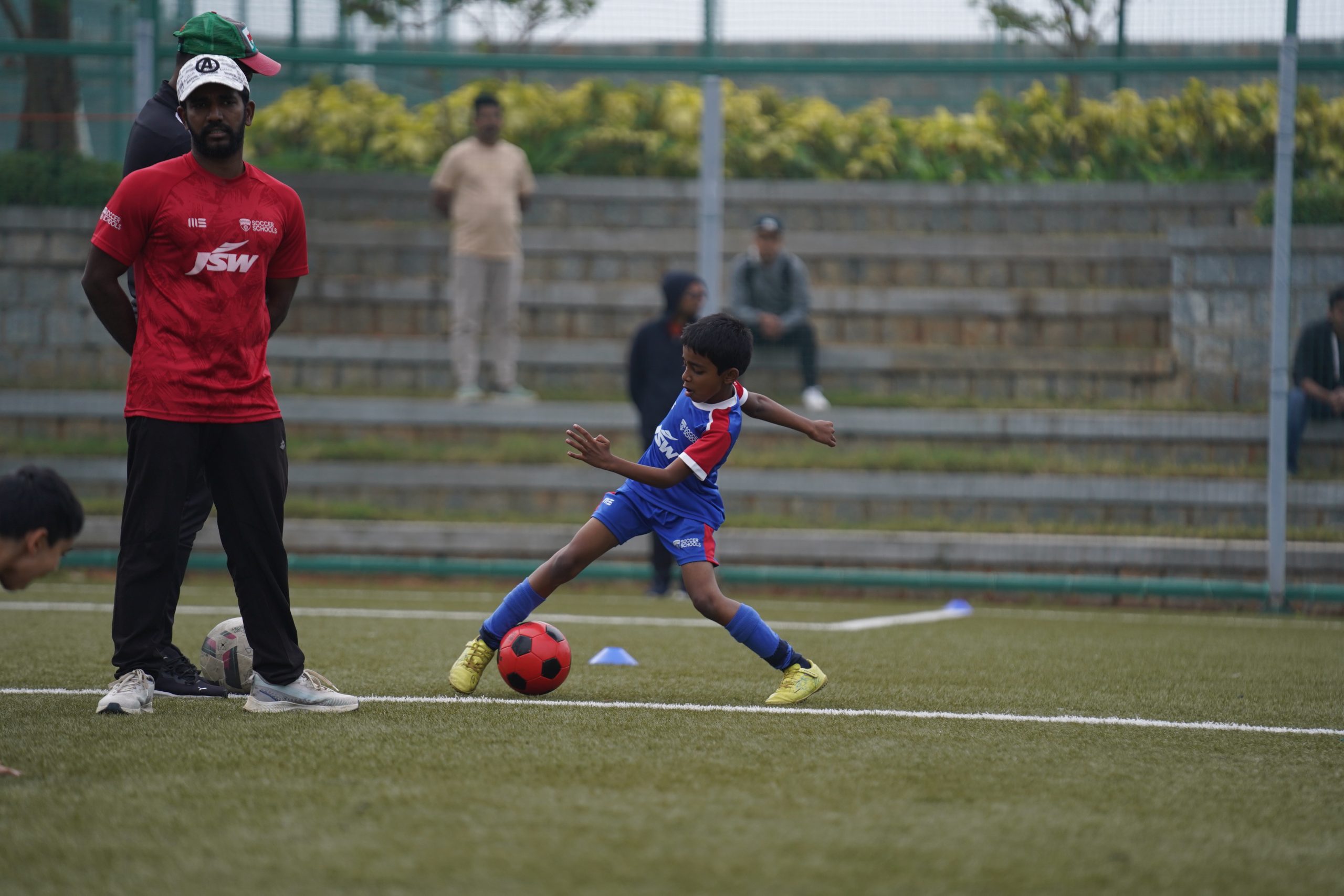
A young striker gets a clear chance in front of the goal. He takes the shot – and misses. There’s a brief pause. He glances at the coach, then at his parents, before jogging back into position.
It’s a small moment, but it reveals everything. Because in that instant, what’s really being tested isn’t his ability to strike a ball – it’s how he sees himself when things don’t go perfectly. Does he shake it off and move on? Or does he carry that weight all match?
How a young player responds to a missed shot doesn’t just affect the game. It shapes how they handle pressure, view mistakes, and ultimately, how much they enjoy playing the game.
In this blog, we’ll see why missed chances affect young players so deeply and how the right approach can help them overcome fear in football and turn pressure into confidence.
What Goes Through a Young Player’s Mind After They Miss?
For most young players, the fear isn’t about missing the shot – it’s about what that miss means. It’s not frustration that hits first; it’s worry about what their coach and parents think. In that moment, what hurts more than the miss itself is the feeling of falling short of their expectations.
For parents, shouting instructions from the sidelines can be encouraging – a way to stay involved and show support to their kids. But for the player, it is pressuring. The same thing happens with coaches who focus only on results. Though none of it comes from a bad place, but together it can make a player feel like mistakes should be hidden instead of learned from. Over time, this belief grows stronger, and players tie their self-worth to the scoreboard. And the more that pressure builds, the harder it gets to perform freely. Studies show that performance anxiety reduces motor control and slows decision-making, which means the more a player fears missing, the more likely they actually are to miss. That’s why helping young players separate their effort from the outcome is so important. When they realise that one miss doesn’t define them, they start playing with clarity and confidence again, focusing on the game itself instead of the fear of getting it wrong.

How to Help Young Players See Mistakes as Learning Moments
Every player misses (even the best) but what really matters is how they overcome the fear that follows.
-
-
- Do they dwell on the mistake?
- Do they learn from it?
-
At BFC Soccer Schools, our coaches remind players that missing isn’t failure; it’s feedback. Every misplaced pass or off-target shot tells you something valuable. Maybe your body angle was off, maybe your first touch was heavy, or your decision came a second too late. The point isn’t to dwell on the mistake – it’s to understand it.
That small shift in thinking changes everything. When players stop saying “I failed” and start asking “What can I adjust?” their mindset moves from self-criticism to self-improvement. They learn to see each miss as a part of the process.
In training sessions, coaches help children break down their big goals into smaller, achievable ones. Instead of setting outcome goals like “I want to score two goals today,” they learn to set process goals such as “I want to get into five scoring positions” or “I’ll strike cleanly with my weaker foot three times.”
It might sound like a small change, but it rewires how young players experience success. Suddenly, progress isn’t measured by the scoreboard – it’s measured by effort, awareness, and consistency. And that’s what builds confidence that lasts far beyond a single match.
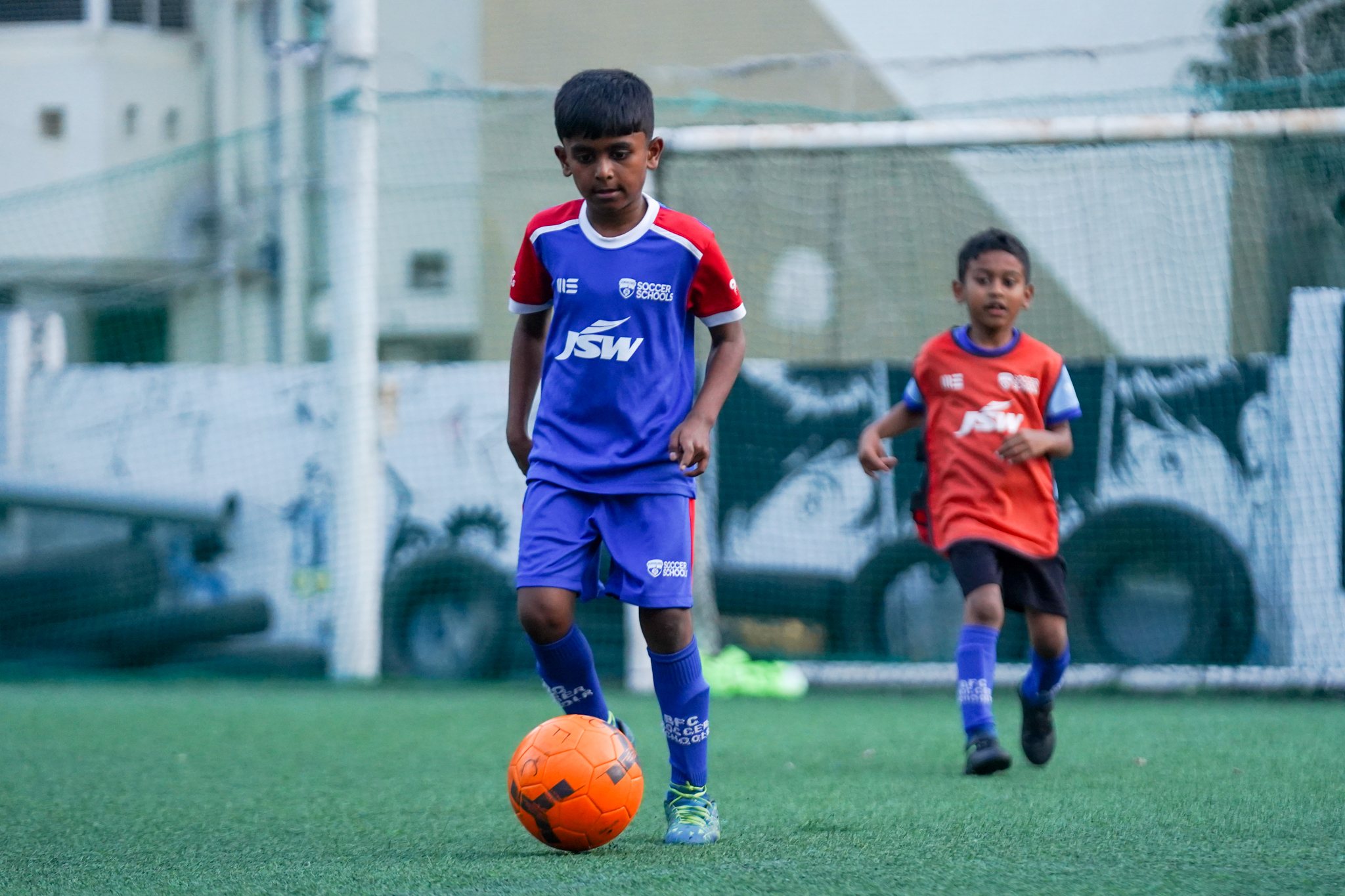
5 Simple Ways to Help Young Footballers Overcome Fear in Football and Stay Confident
-
-
-
- Simulate pressure in practice
-
-
Create match-like moments in training, like countdowns, last-kick drills, or noisy scrimmages. When players regularly face controlled pressure, they stop fearing it. They learn to stay calm and trust their technique even in tense situations.
-
- Reflect after, not react during
When a player misses, the instinct is to show frustration – but reacting in the moment blocks learning. Instead, encourage short reflections after the play: What did I see? What could I do differently next time? This quiet analysis builds self-awareness and emotional control, helping players respond thoughtfully instead of emotionally.
-
- Visualisation & breathing
Before key moments like a penalty, a final pass, or a one-on-one, teach players to pause, breathe slowly, and picture the action going right. Visualisation helps the brain rehearse success before it happens, while steady breathing keeps nerves in check. Over time, this simple routine turns pressure into focus, allowing players to approach high-stress situations with clarity and confidence instead of hesitation.
-
- Celebrate smart decisions
Not every good play ends in a goal. Recognising the right run, the unselfish pass, or the clever press teaches players that thinking well matters as much as finishing well. When coaches and parents praise smart decisions, not just outcomes, players start valuing awareness, teamwork, and courage.
-
- Coach & parent language
The words adults use after a game shape how children see themselves. So don’t ask, “Why didn’t you score?”. Instead, ask, “What did you learn from that chance?” This small change replaces judgment with curiosity. It tells the player that growth matters more than perfection. Over time, calm feedback helps players see football as a space to learn and enjoy the process of getting better.
Conclusion
Every young player misses. It’s part of the game – and more importantly, it’s part of growing up as an athlete. When a player learns to see a miss as feedback instead of failure, football becomes a game to build resilience, patience, and belief in themselves. That shift doesn’t just change how they play – it changes how they approach every challenge.
At BFC Soccer Schools, that’s exactly what we work towards – helping children build confidence that lasts beyond a single match. Every session is designed to teach not just technique, but the mindset to stay calm under pressure and the courage to keep trying, no matter the outcome.
If you’d like your child to experience that environment where learning and growth come before results, you can book a free trial session today. Get in touch and see how the right mindset can turn missed chances into stepping stones for confidence and joy in the game.
Recent Posts
02/06/2026
What Should Your Child Carry to a Football Camp? A Simple Packing Checklist
29/05/2026
How to Prepare Your Child for a Football Trial or Selection Camp
19/05/2026
The ABCD of Receiving the Ball: What Every Young Footballer Needs to Know
Testimonials






FOLLOW US


DOWNLOAD APP


QUICK LINKS
OFFICIAL KIT PARTNER

FOLLOW US
DOWNLOAD APP
GET IN TOUCH
ADDRESS:
Raheja Towers (East), 6th floor, # 26-26, M.G Road, Bangalore, Karnataka, India 560001
Call Us:
