


09/03/2026
Is Your Child Scared of Making Mistakes in Football? 3 Tips to Play Fearlessly
One missed pass. One bad touch. One shot that misses the goal. Quite often, one mistake is all it takes to change a player’s rhythm in the game. They go from playing freely to playing scared and second-guessing decisions they usually make on instinct.
In this blog, we will break down the science behind why mistakes affect young footballers so intensely, plus share strategies that will help players bounce back without losing their momentum.
The Science Behind Why Young Footballers Give Up After Making Mistakes
When your child stops trying after a mistake, they’re not being weak or giving up. Their amygdala (the brain’s alarm system) has been activated. It’s the same part of the brain that tells them to run from danger, except they can’t run during a football game. So instead, their body freezes; their thinking slows down; and instead of playing to enjoy the game, the child starts playing to avoid making another football mistake.
However, we often expect kids to “calm down” or “shake it off” in the same way we’re able to as adults. But the problem is that in children, the prefrontal cortex (the part of the brain responsible for rational thinking and emotional control) isn’t fully developed. In fact, it doesn’t fully mature until someone’s in their mid-twenties. That’s why asking a nine-year-old to calm down after a mistake is asking them to do something their brain literally can’t do on command.
Understanding this changes everything. Because if the fear response is biological, then telling them to try harder or be confident won’t fix it. We need different strategies that actually work with how their brains are wired.
Why How You React After a Setback Matters More Than What You Say
According to research from Stanford, a child’s growth mindset wasn’t actually related to whether their parents had a growth mindset. Instead, it was linked to how parents viewed failure itself. Parents who saw failure as debilitating – even if they believed in the idea of a growth mindset – ended up raising children with fixed mindsets.
The deciding factor, the research showed, was simple:
It wasn’t about what parents believed or said; it was about how they
responded when things went wrong.
You may praise effort at the game, but then immediately schedule extra training sessions after a poor performance. Or you might say “don’t worry about it,” but then spend the entire car ride home breaking down everything that went wrong. Kids are watching and absorbing all of it. They notice when your praise feels rushed, but your corrections feel thorough, and over time, they start to internalise that mistakes carry weight, even when no one says it out loud.
So how do we change the pattern? What can parents do differently starting today? Let’s find out.
3 Ways Parents & Coaches Can Help Young Players Stay Confident After Mistakes
The methods that follow are simple, but they’re built around how kids actually regulate their emotions and refocus under pressure.
1. Praise the Process (Not Just the Result).
When your child scores a goal or makes a great pass, we default to things like “Great goal!” or “You’re so good at this!” or “You’re a natural athlete!” It feels positive. But it focuses on outcomes and talent, which trains kids to believe that making mistakes means they’re not good enough. Instead, we suggest praising the process. For example, you can say, “You kept making yourself available,” or “I noticed you didn’t quit after that.” Such praise works best when it’s specific to what actually happened and focused on the choices or effort your child made.
NOTE: You can still acknowledge when your child scores or plays well. The key is not making that the only thing you praise, so they learn that the process matters just as much.
2. Pre-Game Mistake Framing
A quick pre-game reminder can shift how your child handles mistakes before they even happen. Saying something like, “Mistakes are part of the game today, just like they are for everyone playing,” can change how their brain responds. When mistakes are framed as normal, the amygdala is less likely to trigger a panic response. The mistake is no longer an unexpected threat. It’s simply part of playing.
3. Curiosity Over Criticism
What questions do you ask after games? Most of us say things like, “Why did you do that?” or “You should have passed there.” It sounds like feedback, but to a child, it often feels like criticism. In those moments, football mistakes stop being part of learning and start feeling like something they need to justify or apologise for. A better approach is to stay curious and ask open-ended questions, like “What were you thinking in that moment?” or “If you could replay that, what would you try differently?” This shifts the conversation from judgment to curiosity. Your child gets space to reflect, and the conversation stays focused on learning.
These are the kinds of approaches coaches at BFC Soccer Schools use to help players build resilience on the field. If you’re curious about what this looks like in practice, our free trial session gives you a chance to see our coaching philosophy firsthand.
How to Tell When Fear of Making Mistakes Is Normal and When It Needs Attention
It’s normal for young players to hesitate before taking a shot or occasionally look towards the coach for reassurance. But some signs go beyond normal learning challenges, such as:
-
-
- Frequent negative self-talk before or after matches that undermines confidence
- Avoiding football training or matches by making excuses or asking to skip sessions.
- Anxiety that does not go away even after support from coaches and parents
- Physical signs of stress before games, such as feeling sick or unable to sleep.
- Strong emotional reactions to minor football mistakes that feel out of proportion to the situation
-
If you’re seeing these signs in your child, talk to the coach about what you’re noticing during practice and games. Sometimes it’s simply a matter of the child needing a bit more one-on-one reassurance. Other times, the training environment itself might be part of the problem. A grassroots football academy that prioritises emotional safety alongside skill development can make all the difference in how your child processes mistakes.
If the symptoms persist even in a supportive environment, we suggest consulting with a sports psychologist. They can teach your child specific techniques like breathing exercises, visualisation, or reframing thoughts that reduce the fear response during games and training.
Remember: This isn’t about your child being “too sensitive”; it’s about equipping them with practical tools to manage pressure when things don’t go their way.
Mistakes Are Part of Every Footballer’s Journey
Fear of making mistakes is part of being human. The goal isn’t to raise kids who never feel afraid. It’s to raise kids who know how to keep playing freely after mistakes. What matters most in that process is how you respond when they mess up. That single moment, your reaction, teaches them whether mistakes are something to hide from or something they can recover from and learn through.
At BFC Soccer Schools, accredited as one of the best football academies in India, we’ve built a coaching philosophy around treating mistakes as expected parts of learning, not things to be punished or avoided. When kids are free to try, fail, and try again – they stop playing scared and start trusting their instincts. If you want your child to train football in an environment where mistakes are learning opportunities and confidence grows alongside skill, reach out to our team for a free trial session.
Let’s help your child develop the resilience they need, on and off the field.
Recent Posts
19/05/2026
The ABCD of Receiving the Ball: What Every Young Footballer Needs to Know
01/04/2026
Fear of Tackling in Football: Why It Happens and How to Fix It
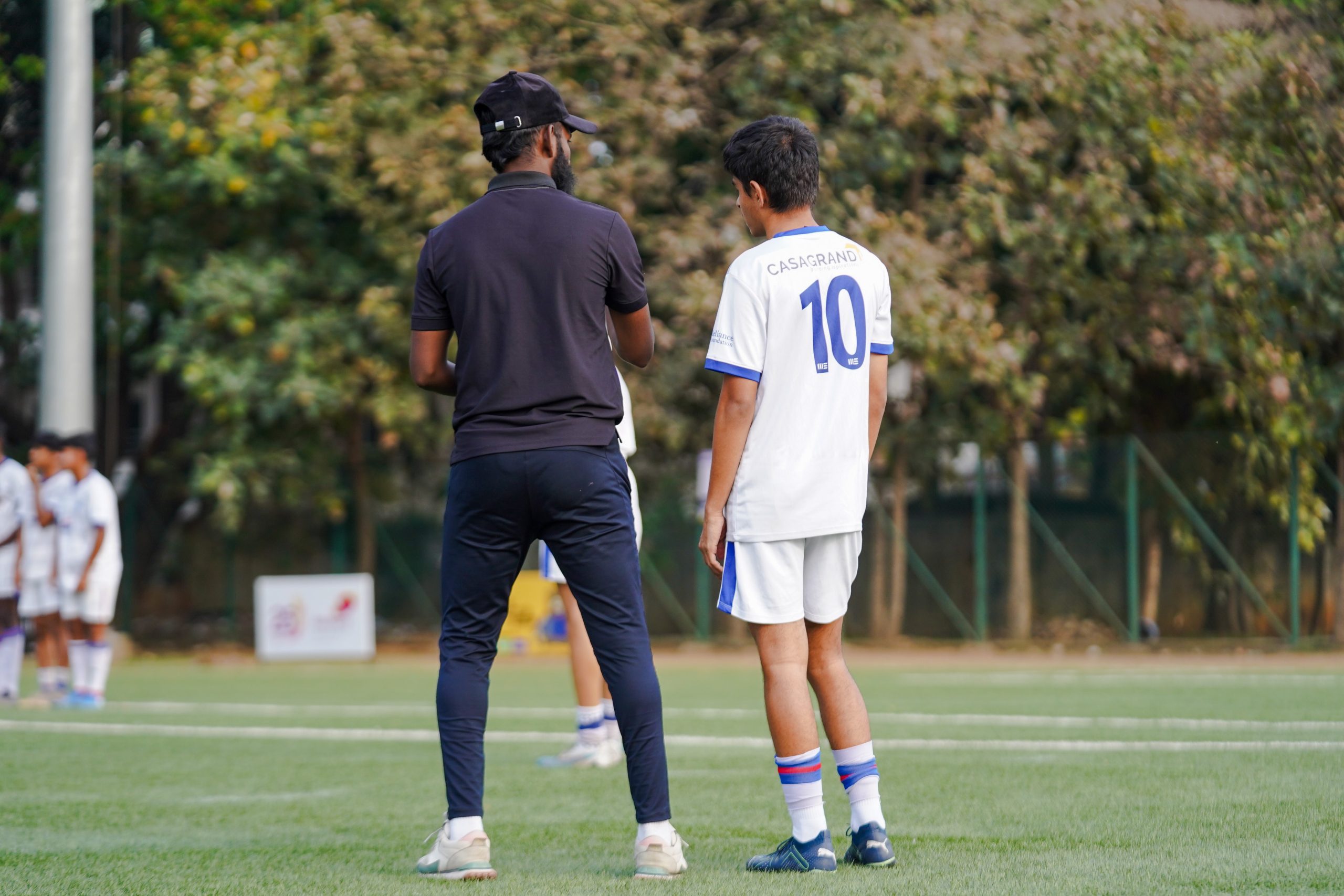
26/03/2026
Best Football Warm-Up & Cool-Down Exercises for Young Players
Testimonials






FOLLOW US


DOWNLOAD APP


QUICK LINKS
OFFICIAL KIT PARTNER

FOLLOW US
DOWNLOAD APP
GET IN TOUCH
ADDRESS:
Raheja Towers (East), 6th floor, # 26-26, M.G Road, Bangalore, Karnataka, India 560001
Call Us:
