


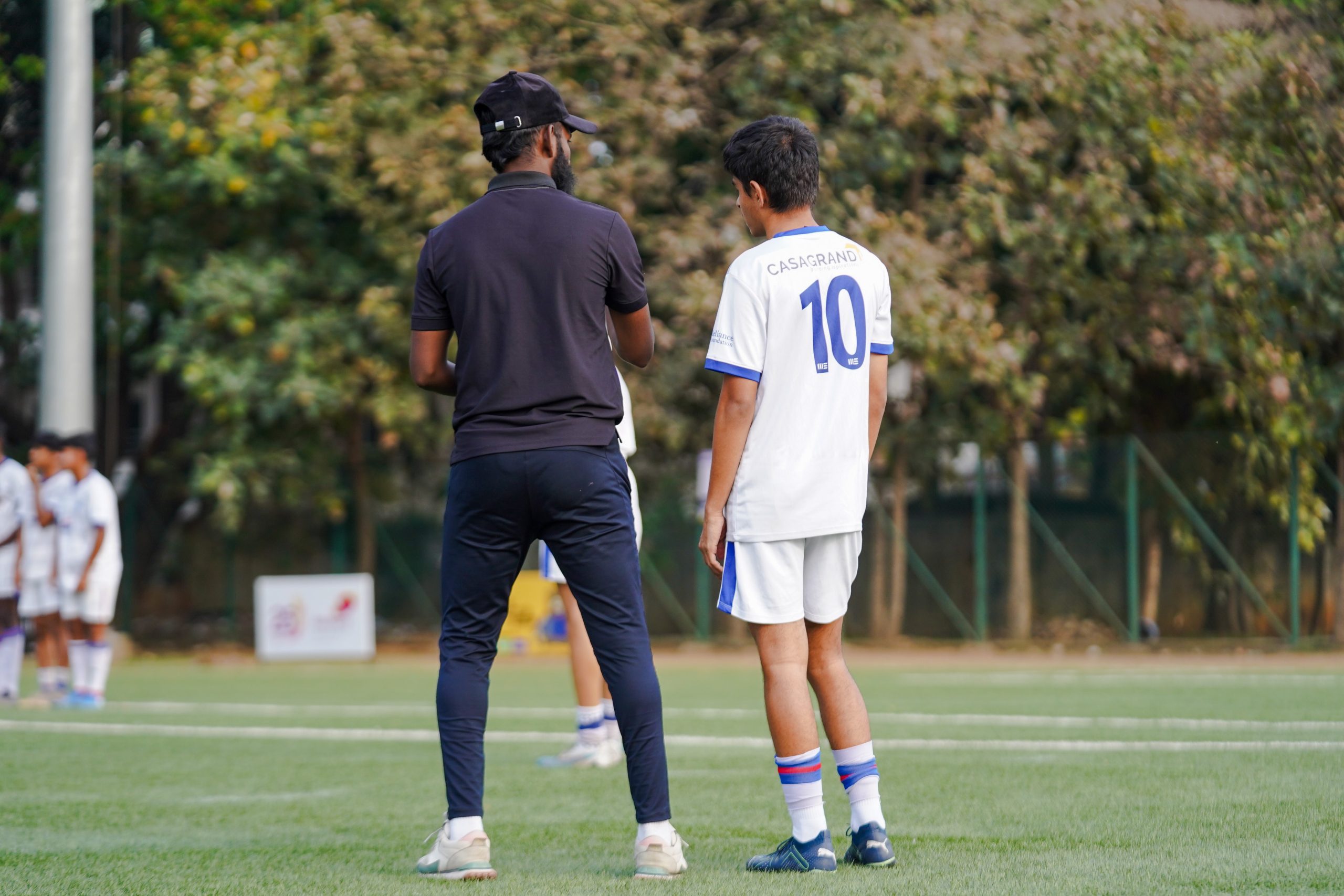
26/03/2026
Best Football Warm-Up & Cool-Down Exercises for Young Players
Most parents assume injuries happen because of a bad tackle, a fall, or a collision on the field.
But in many cases, the real cause of injuries comes down to two habits: starting training without a proper warm-up and finishing it without a cool-down routine.
These do not feel like problems in a single session. But over time, when the body is not prepared before training or allowed to recover after it, the risk of injury increases.
In this blog, we will walk you through the football warm-up and cool-down exercises every young player should follow so they can stay injury-free and keep improving without unnecessary setbacks.
Why Static Stretching Before Training Can Reduce Performance on the Field
If you’ve ever watched your child’s training session, you’ve probably noticed a common pattern.
The coach calls for a warm-up, and players begin with static stretches like touching their toes or pulling their quads. Everyone’s doing it, so it feels like the right way to start. But static stretching before training can actually reduce performance. According to the Journal of Strength and Conditioning Research, static stretching lowers sprint speed and reduces jump power.
Now think about what a typical day looks like for most young players before they reach the ground. They spend hours sitting in school, followed by a car ride to training. By the time they step onto the pitch, their bodies are not yet ready for movement. At that point, holding a stretch does not prepare the body for movement. The body stays in an inactive state when it actually needs to transition into movement and prepare for the demands of the session.
The 4 Step Warm-Up Routine Every Young Footballer Should Follow
A proper warm-up isn’t about doing a few random exercises. It follows a clear sequence. That’s where the RAMP framework comes in. Developed by sports scientist Ian Jeffreys and widely used by the best football coaches and academies, it prepares players for the intensity of football training. This sequence is broken into four simple steps:
- Raise (3–4 mins): Start with a light jog and gradually add skipping or small direction changes. Keep the body moving continuously so the heart rate rises and the muscles begin to warm up properly.
- Activate (2–3 mins): This phase focuses on activating key muscles that haven’t been active throughout the day, especially the glutes and core. Simple movements like high knees, glute bridges, and lateral shuffles help the body feel more stable and ready for sharper movements during training.
- Mobilise (2–3 mins): This phase focuses on helping the body move more freely. Use dynamic actions like leg swings, walking lunges, and hip circles so muscles and joints loosen up and move with better control during training.
- Potentiate (2 mins): This stage increases the pace to reflect actual gameplay. Quick movements like sprints, jumps, and fast passing sequences so players can adapt to the speed and intensity of actual gameplay.
This entire sequence takes just 10-12 minutes, and it helps the body move from a resting state to being ready for football. When this step is skipped, players begin training without being fully prepared, and it shows in their reactions and overall performance.
Just like the body needs a structured start to prepare for training, it also needs a cool-down routine to support recovery after training.
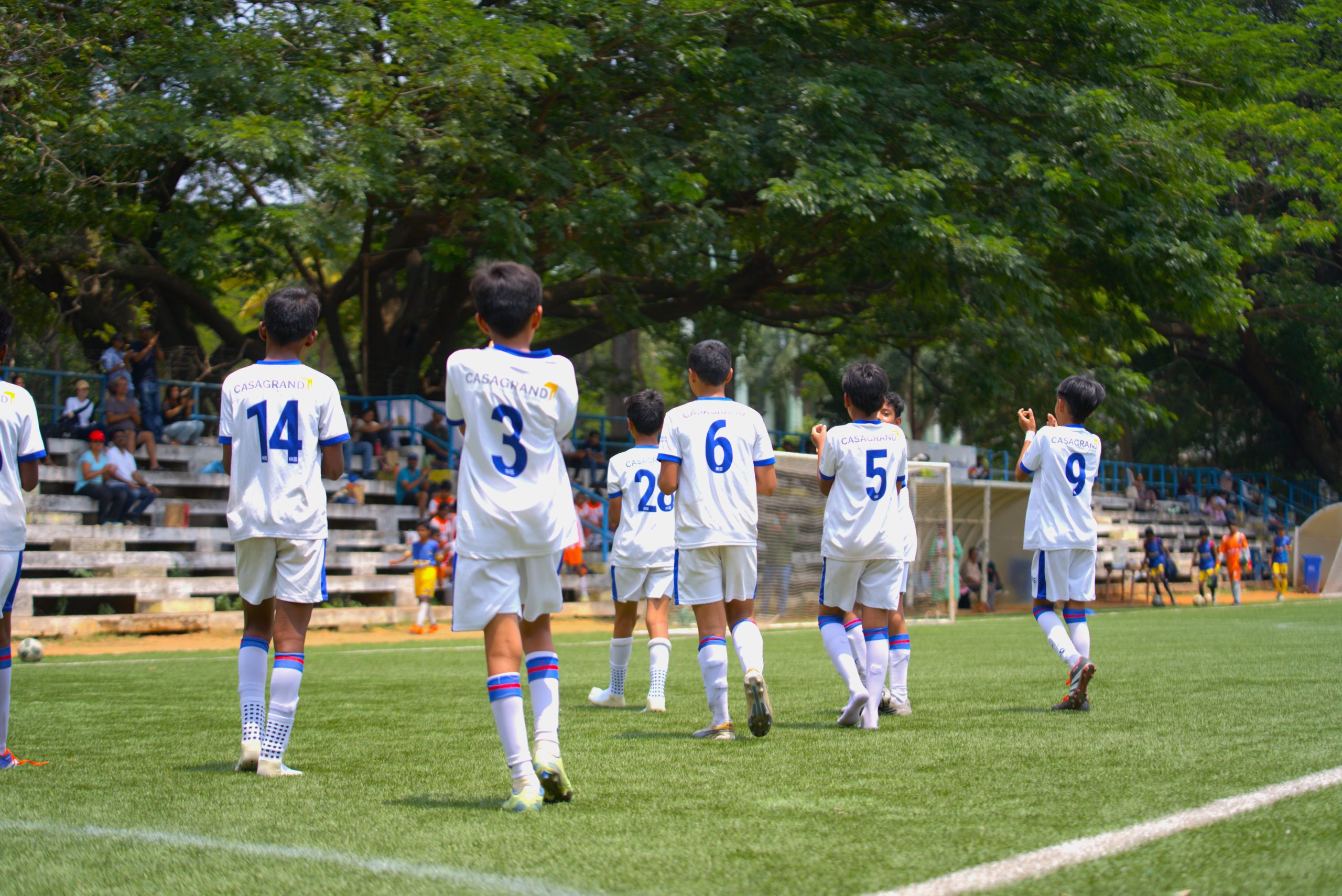
The Simple Cool-Down Routine That Reduces Injury Risk After Training
At the end of most sessions, players walk off the pitch and pack up. Parents are usually waiting, and it feels natural to leave as soon as training ends. But after training, the body is still in a high-activity state. Muscles are still under strain, and the heart rate is still elevated. That’s why a proper cool-down is needed to help the body slow down gradually after training.
- Gradual deceleration (3–4 mins): Start with a light jog and gradually slow down to a walk. This helps the body transition out of training while allowing heart rate and circulation to return to normal.
- Static stretching (5 mins): After training, the body is warm, which makes this the right time for stretching. Focus on key muscle groups like hamstrings, quads, calves, and hip flexors. Hold each stretch for 20 to 30 seconds so muscles can relax and recover.
- Breathing (1–2 mins): End the session with a short period of controlled breathing. Take slow, deep breaths and let the body settle back to a resting state. This helps reduce tension, stabilise heart rate, and support recovery after the intensity of training.
Most parents focus on what happens during training. But what happens in these last ten minutes has a direct effect on the rest of the evening at home. Post-exercise stretching triggers a dopamine release, which helps players come down from the intensity of training and transition back to a calmer state.
Conclusion
Most of the conversation around youth football is about skills, tactics, and match performance. What rarely gets talked about is the unglamorous part of football training: proper warm-up and cool-down exercises. They are what make the session effective. Without them, a player’s body is either not ready for training or not recovering well enough for the next session.
At BFC Soccer Schools, a grassroots football academy, our licensed coaches structure every session with a proper warm-up and cool-down so players are prepared when training begins and recovered before the next one. If you want to see how our sessions are structured from start to finish, you can book a free trial and see how your child trains through a complete session.

Frequently Asked Questions
How long should a full warm-up and cool-down take for young players?
A proper warm-up and cool-down should take about 10 minutes each.
Should footballers do static stretching before football training?
No. Research shows that static stretching lowers sprint speed and cuts jump power.
How often should young players drink water during football training?
Young players should take small sips of water every 20 minutes during training.
Recent Posts
02/06/2026
What Should Your Child Carry to a Football Camp? A Simple Packing Checklist
29/05/2026
How to Prepare Your Child for a Football Trial or Selection Camp
19/05/2026
The ABCD of Receiving the Ball: What Every Young Footballer Needs to Know
Testimonials









FOLLOW US


DOWNLOAD APP


QUICK LINKS
OFFICIAL KIT PARTNER

FOLLOW US
DOWNLOAD APP
GET IN TOUCH
ADDRESS:
Raheja Towers (East), 6th floor, # 26-26, M.G Road, Bangalore, Karnataka, India 560001
Call Us:
