


01/04/2026
Fear of Tackling in Football: Why It Happens and How to Fix It
“Be gentle.”
“Don’t hit others.”
“Keep your hands to yourself.”
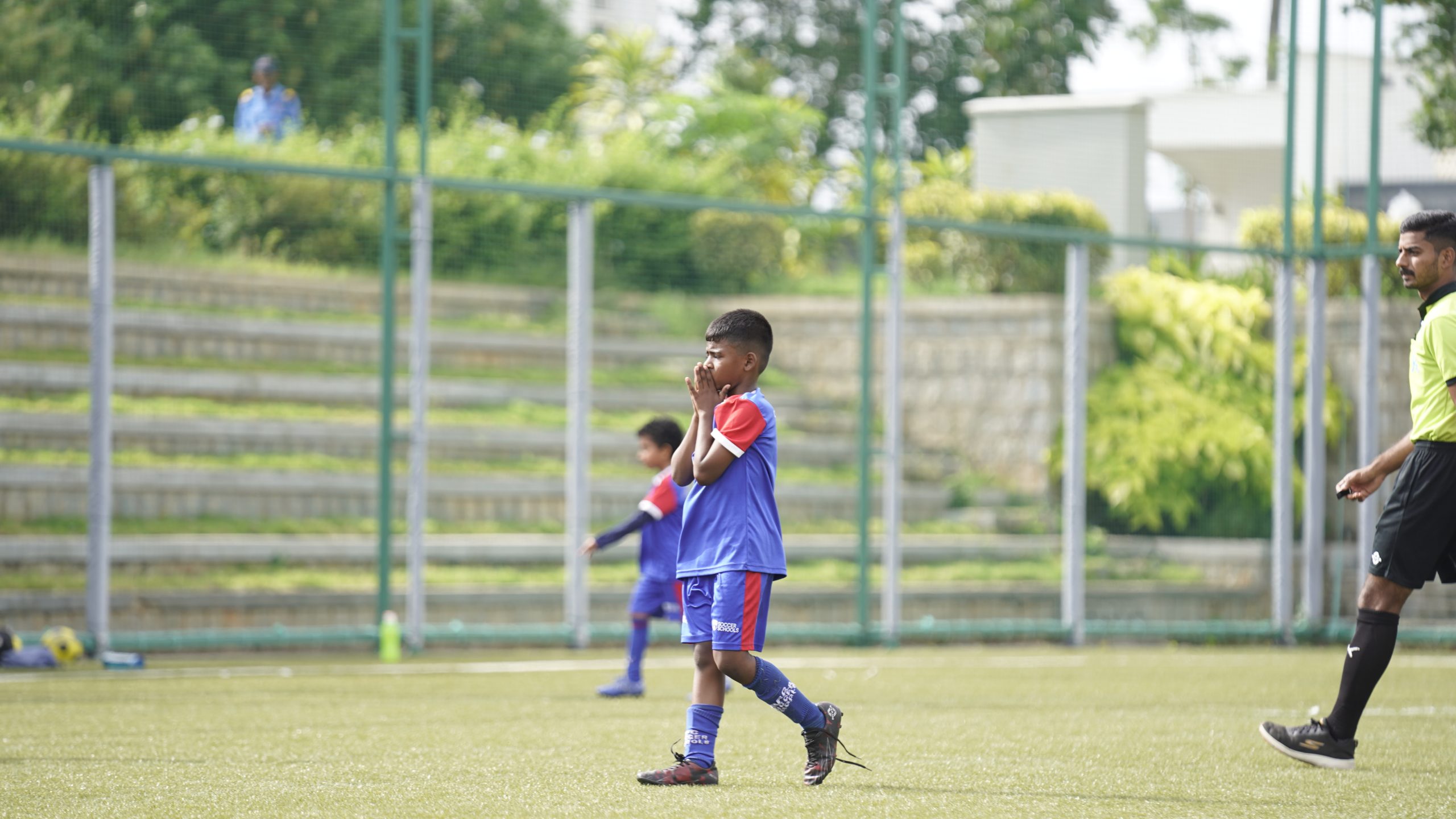
Most kids hear some version of such advice growing up – and rightly so. Teaching children to be careful with others and avoid unnecessary physical contact is an important part of growing up. But football is a contact sport. Players have to go for the ball, challenge opponents, and hold their ground. For a child who has spent years being told to be gentle around others, it’s not easy to suddenly play a contact sport.
However, that is not the only thing holding them back. When a player mistimes a block tackle or loses the ball, everybody sees it – their teammates, coaches, and even parents on the sidelines. For a young player, these moments can feel intimidating, which is why they begin to avoid tackles altogether.
The good news?
Fear of tackling is not permanent.
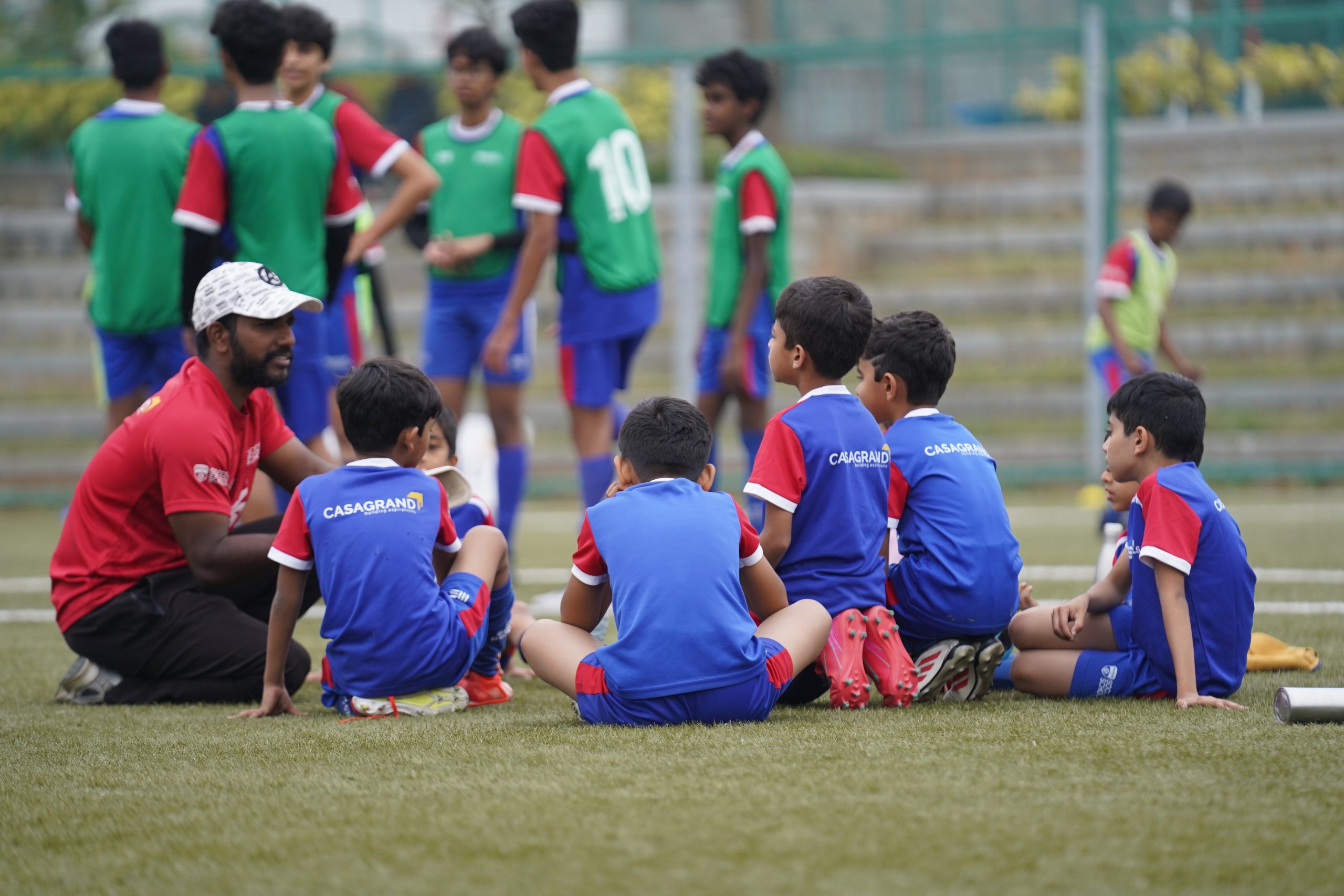
At BFC Soccer Schools, a grassroots football academy, coaches see hesitation around the block tackle as one of the most common football challenges among new players. Rather than telling them to toughen up or be more aggressive, our coaches understand what is actually causing the hesitation and teach the right mindset and technique so players can go in for challenges and play freely.
Curious to see how our coaches guide young players through this process? Book a free trial session for your child today.
3-Step Approach to Help Young Players Tackle with Confidence
Building tackling confidence comes down to three things: teaching the right technique, following the right progression, and handling mistakes the right way.
1/ Technique Before Contact
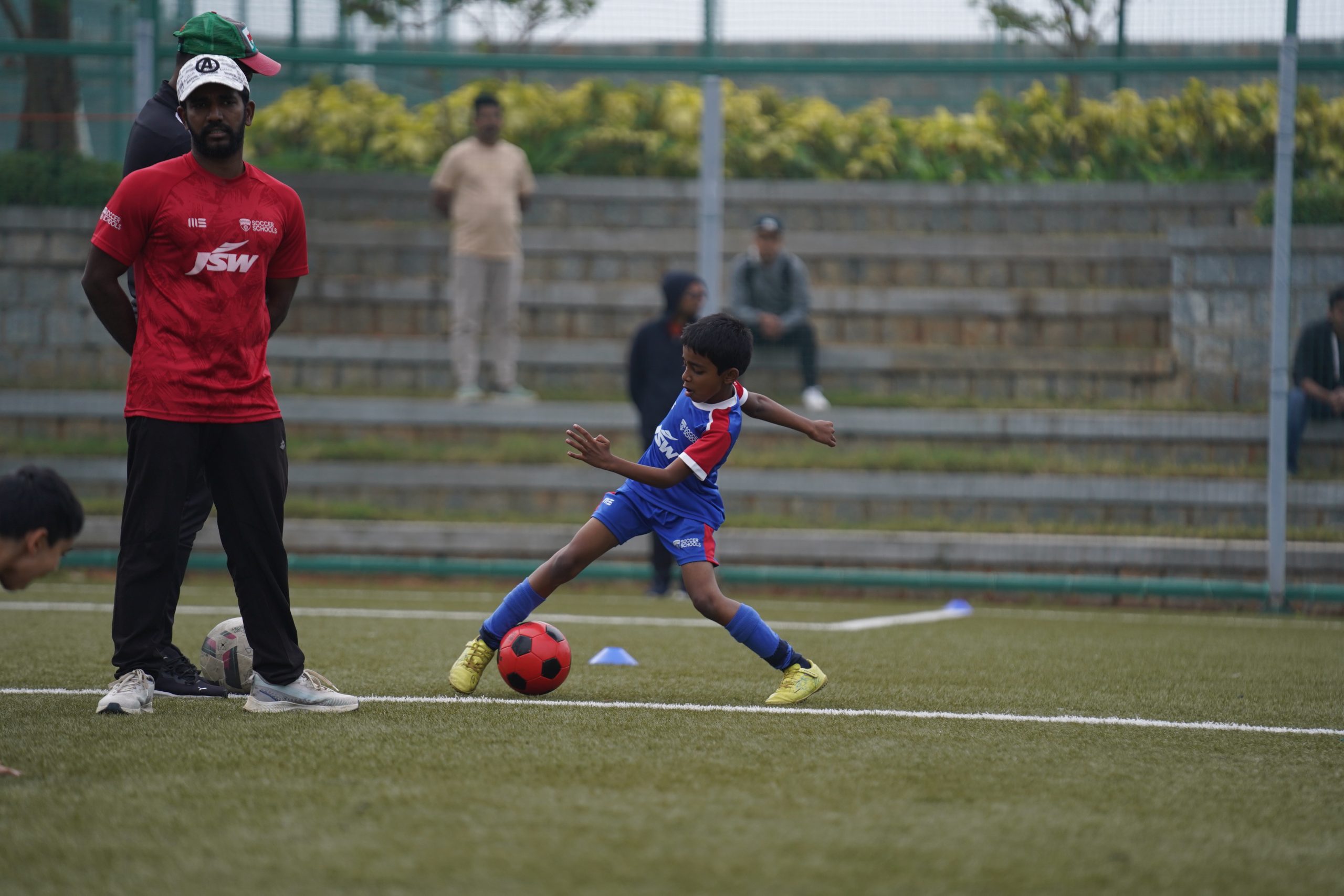
The starting point is always technique. A basic block tackle, for example, gives players a clear structure to follow: keep the body low, keep the eyes on the ball, plant one foot for balance, and drive the inside of the other foot firmly through the ball to win possession. The more a player works on the movement, the less the brain has to second-guess it.
2/ The Right Progression
Players should not be rushed into full-speed tackling situations before they are ready. The skill needs to be introduced in a structured way, starting with:
- Shadowing an opponent’s movement without going in for the ball
- Defensive stance drills focusing on knee bend, balance, and foot positioning
- Partner drills where one player holds the ball while the other practises the tackle motion
Once players are comfortable with these steps, you can introduce small-sided games like 2v2 or 3v3. They increase repetition in realistic match situations. This step-by-step exposure helps players adapt to match pressure until they can play without holding back.
3/ Acknowledge the attempt
The reaction after a missed tackle shapes what a player does the next time. If a player goes in and does not win the ball, here is how coaches can handle that moment:
- Acknowledge the intent to go for the ball
- Correct specifics like body position or timing
- Let the player try again without stopping the flow too long
When coaches react with criticism or frustration, players become cautious. They start second-guessing themselves. But when the feedback is constructive, players focus on adjusting their technique rather than holding themselves back.
Recommended Reading:
Want to make sure your child is learning from the right coach? Read our guide on identifying the right football coach and find out the qualities the best coaches share.
How Parents Can Help Their Child Overcome the Fear of Tackling
While coaches play a key role in developing tackling confidence on the pitch, what happens off it matters just as much. A player’s mindset is often shaped by the words and reactions of their parents. Here is how parents can support their child through the process:
- Play 1v1 football with your child and let them practice the block tackle at a slow pace
- Watch football matches together and point out good tackles to teach kids the physical side of the game.
- Trust the coach’s process and avoid giving technical instructions from the sideline
- When your child goes in for a tackle, acknowledge it, even if they do not win the ball
For a child who is still figuring out how to block tackle in football, the reassurance of having a parent in their corner, without judgment or pressure, is often what gives them the courage to keep trying.
Conclusion
Fear of tackling is something most young footballers go through at some point. The ones who move past it are not always the most talented or the most fearless. They are the ones who are guided through the right technique, given the space to make mistakes, and supported by coaches who know how to build confidence without forcing it. At BFC Soccer Schools, one of the best football academies in India, the focus is on helping players grow into these moments by teaching them what to do and creating an environment where they feel comfortable trying, learning, and building confidence through the process. Want your child to experience this kind of learning environment firsthand? Book a free trial session at one of our football training centres near your home.
Frequently Asked Questions
Could my child get injured while learning to tackle? How do coaches prevent that?
While the concern is completely valid, injuries during tackling drills are far less common than most parents expect. At BFC Soccer Schools, coaches introduce the block tackle in a controlled environment, focusing on technique before any contact is involved. Players only move into match-like situations once they are comfortable, which keeps the learning process safe at every stage.
Should I talk to the coach if I notice my child avoiding physical play?
Yes. The sooner a coach knows, the sooner they can address it in training before the hesitation becomes a habit.
What signs show that my child is slowly gaining confidence on the field?
The most obvious sign is that they start going in for challenges without being told to. Beyond that, they stop second-guessing before a tackle and bounce back faster after a missed tackle.
Recent Posts
02/06/2026
What Should Your Child Carry to a Football Camp? A Simple Packing Checklist
29/05/2026
How to Prepare Your Child for a Football Trial or Selection Camp
19/05/2026
The ABCD of Receiving the Ball: What Every Young Footballer Needs to Know
Testimonials




FOLLOW US


DOWNLOAD APP


QUICK LINKS
OFFICIAL KIT PARTNER

FOLLOW US
DOWNLOAD APP
GET IN TOUCH
ADDRESS:
Raheja Towers (East), 6th floor, # 26-26, M.G Road, Bangalore, Karnataka, India 560001
Call Us:
