


31/12/2025
How Football Can Improve Your Child’s Focus & Academic Performance
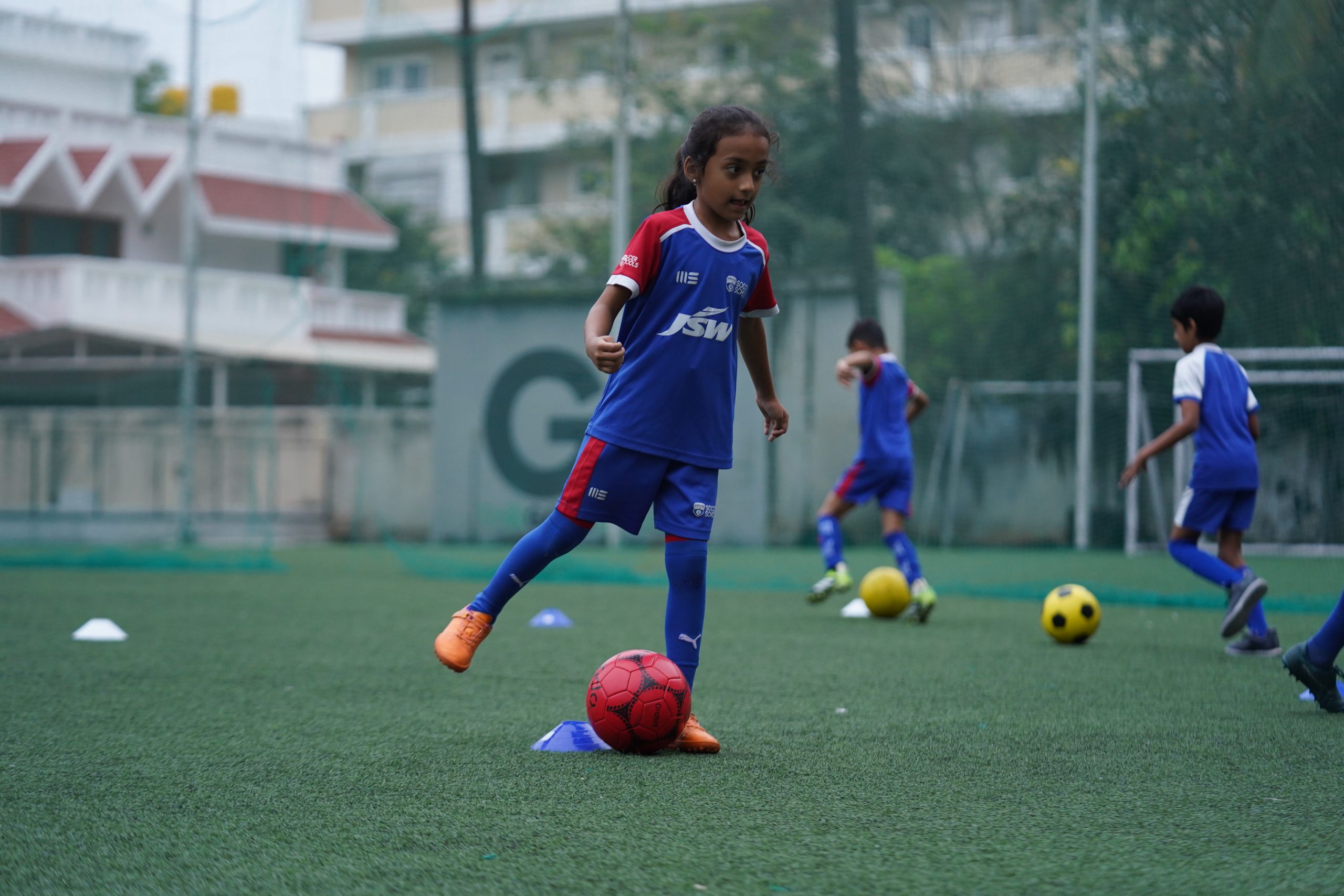
What if the solution to your child’s focus problems wasn’t another tutor, study app, or stricter screen time rule? What if it were something as simple as playing a sport like football?
We know what you’re thinking: more activities mean less study time. They’ll come home exhausted and have no energy to focus on studies. But, believe it or not, the opposite is true. In this blog, we’ll see the benefits of football for youth, plus how it rewires the brain and builds cognitive skills that determine academic success.
Why Is It So Hard for Kids to Just Sit and Focus?
Kids between 8 and 12 spend an average of 5.5 hours a day on screens. During those hours, every swipe delivers something new and every tap brings instant feedback.
When this happens enough times, the brain starts to recognise a pattern:
Rewards come fast, and satisfaction doesn’t require effort.
That’s why, when kids sit down to do homework or practice a skill that takes time to master, they can’t focus. Their brain, now wired for constant stimulation, craves that quick hit of dopamine.
But here’s the good news – this isn’t permanent. The same brain that learned to expect instant rewards can learn a different pattern. And this is where sports like football come in. Football retrains the brain to get that same dopamine hit from hard work and small wins over time.

How Football Rewires Your Child’s Brain for Better Focus
When we think of football, fitness and teamwork come to mind. But did you know football actually reshapes how your child’s brain works? According to studies, children who play football have a hippocampus (the part of the brain responsible for memory and learning) about 12% larger than kids who don’t.
Beyond structure, football also changes the brain at a chemical level. While your child is running, dribbling, and playing, their brain is releasing three key chemicals that directly affect how well they can focus and learn:
-
-
- Dopamine: Unlike the instant dopamine hit from screens, football releases dopamine through effort and achievement. When your child improves a fundamental skill, completes a drill, or scores a goal, the brain learns that hard work leads to satisfaction. Over time, this becomes one of the most valuable youth football benefits for focus and discipline.
-
- Endorphins: These act as natural stress relief and are released throughout football practice. After training, your child feels less tense and more emotionally balanced. That baseline calm helps them sit through homework and absorb information without their mind wandering.
-
- Serotonin: This chemical manages emotional balance. When your child plays football regularly, serotonin levels rise, which means they feel happier and more stable. A better mood makes their brain more open to learning and retaining information.
-
In other words, your child’s brain is being restructured through football. But does this actually improve their schoolwork and grades?
The answer is an unqualified yes.
Recommended Reading:
Want to know more about how football shapes your child? Read our detailed guide on the benefits of playing football for young players
How Football Trains the Brain for Academic Success
A meta-analysis of 1,574 children who participated in football training programs showed measurable improvements in attention, self-control, and working memory. These three skills are part of what researchers call executive function.
This isn’t just theory; parents at BFC Soccer Schools (an award-winning football academy) say their children now stay attentive for longer while studying. They also handle disappointment better and stay calmer under pressure. Want to see similar progress in your child? Book a free trial session at any of our football coaching centres in Bengaluru and see the difference yourself.

What Is Executive Function & How Football Builds It
Executive function manages how the brain processes and completes tasks.
It includes working memory to hold information, self-control to resist distractions, and mental flexibility to adapt when needed. Studies consistently show these skills matter more for academic outcomes than measured intelligence. Now, when a child plays football, these mechanisms are naturally built. During a game, your child isn’t just running – they’re thinking. They’re holding instructions in mind, watching teammates, and reacting to what the opposition does next. As they get tired and start making mistakes, they learn to stay focused and keep pushing. Over time, this constant unpredictability teaches their brain how to adjust, adapt, and move forward without shutting down.
And here’s what’s remarkable: that shift doesn’t stay on the pitch.
You start seeing it in school, too. Assignments that once felt overwhelming become easier to break down. Sitting through an entire lesson takes less effort. Making sense of different subjects starts to feel more natural. Their brain has learned how to manage multiple pieces of information without losing focus.
Recommended Reading:
Worried about balancing football and studies? Learn how to balance both football and academics without pressure.
Conclusion
Your child’s brain is still developing, so now, it’s learning patterns. Either from screens that reward instant gratification, or from activities that teach focus and resilience. You can’t control everything about their environment, but you can give them a place where their brain learns the right lessons. A place where rewards come from teamwork and improvement, where focus is built through repetition, and where the shifting nature of the game teaches the brain to stay engaged without needing constant stimulation. That’s the power of football.
This is the foundation on which BFC Soccer Schools is built. We understand that youth football benefits go far beyond the pitch – that’s why we’re not just teaching kids how to pass or shoot; we’re giving them a structured space where their brains learn to stay focused and handle disappointment. It’s football, yes. But it’s also a training ground for mental habits that last a lifetime.
If you’re wondering whether this could work for your child, there’s only one way to find out. Let your child join a free trial session at BFC Soccer Schools.
Recent Posts
01/04/2026
Fear of Tackling in Football: Why It Happens and How to Fix It
26/03/2026
Best Football Warm-Up & Cool-Down Exercises for Young Players
19/03/2026
Undertraining & Overtraining in Young Footballers: Finding the Right Balance
Testimonials










FOLLOW US


DOWNLOAD APP


QUICK LINKS
OFFICIAL KIT PARTNER

FOLLOW US
DOWNLOAD APP
GET IN TOUCH
ADDRESS:
Raheja Towers (East), 6th floor, # 26-26, M.G Road, Bangalore, Karnataka, India 560001
Call Us:
