



29/12/2025
New Year, New Goals: How Young Footballers Should Set Goals for 2026
January is here, and one important question for our football parents is:
“How can I help my child improve their football skills this year?”
The answer isn’t more practice sessions or expensive gear. Sometimes, what young footballers really need is guidance in setting the right kind of goals. In this blog, we’ll see how young players can turn vague hopes into achievable goals, and how parents can support their child in a way that encourages growth.
Are Young Footballers Chasing the Wrong Goals?
At BFC Soccer Schools, when coaches ask young footballers what their goal is, the answers are often simple: “be a better player” or “win more games.” On the surface, it sounds reasonable. But with goals like these, players don’t have anything clear to work toward. When a goal isn’t specific, they can’t figure out what to practice or how to tell if they’re actually improving.
Another common pattern we see is focusing on outcomes they can’t fully control, like making the starting eleven or winning the district tournament. These are exciting ambitions.
But the truth is:
Selection depends on the coach’s decision; results depend on teammates, opponents, and even the weather. So when players put all their energy into outcomes beyond their control, disappointment becomes inevitable – no matter how hard they work.
That’s the bad news. The good news? With the right goal-setting approach, players will know exactly what to work on and how to achieve their goals.

The Goal-Setting Method That Keeps Young Footballers Motivated
Let’s start with the two types of goals every player needs:
-
-
- Process Goals: These are the daily habits your child can control. For example, practice 10 minutes after school; drink water every 20 minutes during sessions; stretch before each practice. Process goals are small and manageable.
- Performance Goals: These goals focus on beating their own past performance, instead of comparing to others. For example, improve sprint time by 0.5 seconds; increase stamina to play a full match without getting tired, and so on. Performance goals build confidence because progress is measurable, and they’re in full control of the effort.
-
These two types of goals work hand in hand. If you focus on the daily process goals, you’ll achieve performance goals over time. Now, let’s talk about how to structure these goals properly.
What is The SMART Framework?
SMART stands for Specific, Measurable, Achievable, Relevant, and Time-Bound.
Specific means the goal is clear and focused, not some general idea of “getting better.” Measurable means you can track progress with numbers or clear actions, so you know if you’re moving forward. Achievable means it’s challenging enough to push your child, but still realistic for their current level. Relevant means it matters to them personally and connects to their position or interests. And time-bound means there’s a deadline to create focus and urgency.
When you combine all five elements, you create a roadmap that makes football development feel achievable instead of overwhelming.
Difference Between Vague vs SMART Goals in Football
| Vague Goals | SMART Goals |
|---|---|
| Get better at dribbling | Complete the cone dribbling drill with both feet in under 30 seconds by February 15 |
| Improve my fitness | Run for 20 minutes without stopping, three times per week, by the end of January |
| Score more goals | Take 10 shots on target after every practice session for the next four weeks |
| Be a better defender | Win 7 out of 10 one-on-one defensive situations during Saturday football training sessions by March |
| Help my team more | Complete at least 3 successful assists during matches this month |
When goals are this clear, players don’t need constant reminders. They know what to do and can track their own progress.

5 Ways to Be a Supportive Football Parent (On and Off the Pitch)
Now we know what achievable goals look like – let’s talk about the role of parents. Because the way parents support their child through the process determines whether goals succeed or fade.
-
-
-
Child-Led Goal Setting
-
-
Sit with your child this month and ask one simple question: “What do YOU want to achieve in football this year?” Then let them talk. Once they’ve figured it out, write the goals down together. When they own the goal from the start, they’ll chase it with commitment.
-
-
-
Review And Reset Goals
-
-
Don’t wait until the end of the season to talk about progress. Check in weekly by asking simple questions like “How’s your goal going? Need any support?” Then once a month, review what’s working and adjust if needed.
-
-
-
Celebrate Small Wins
-
-
Small wins build momentum, but only when they’re noticed. When your child improves something they struggled with last month, point it out. When they put in effort even when no one is watching, acknowledge it. That recognition fuels the next step forward.
-
-
-
Avoid Post-Match Criticism & Player Comparisons
-
-
Sometimes, parents critique their child in the car ride home after a match – don’t do this. Give them time to settle emotionally before discussing anything. If they want to talk about the game, they’ll open up when they’re ready. Beyond that, avoid comparing them to other players because every child develops at their own pace.
Remember: this is not about being the perfect parent. It’s about showing up consistently and letting your child know you’re on their side, even if they win or lose.
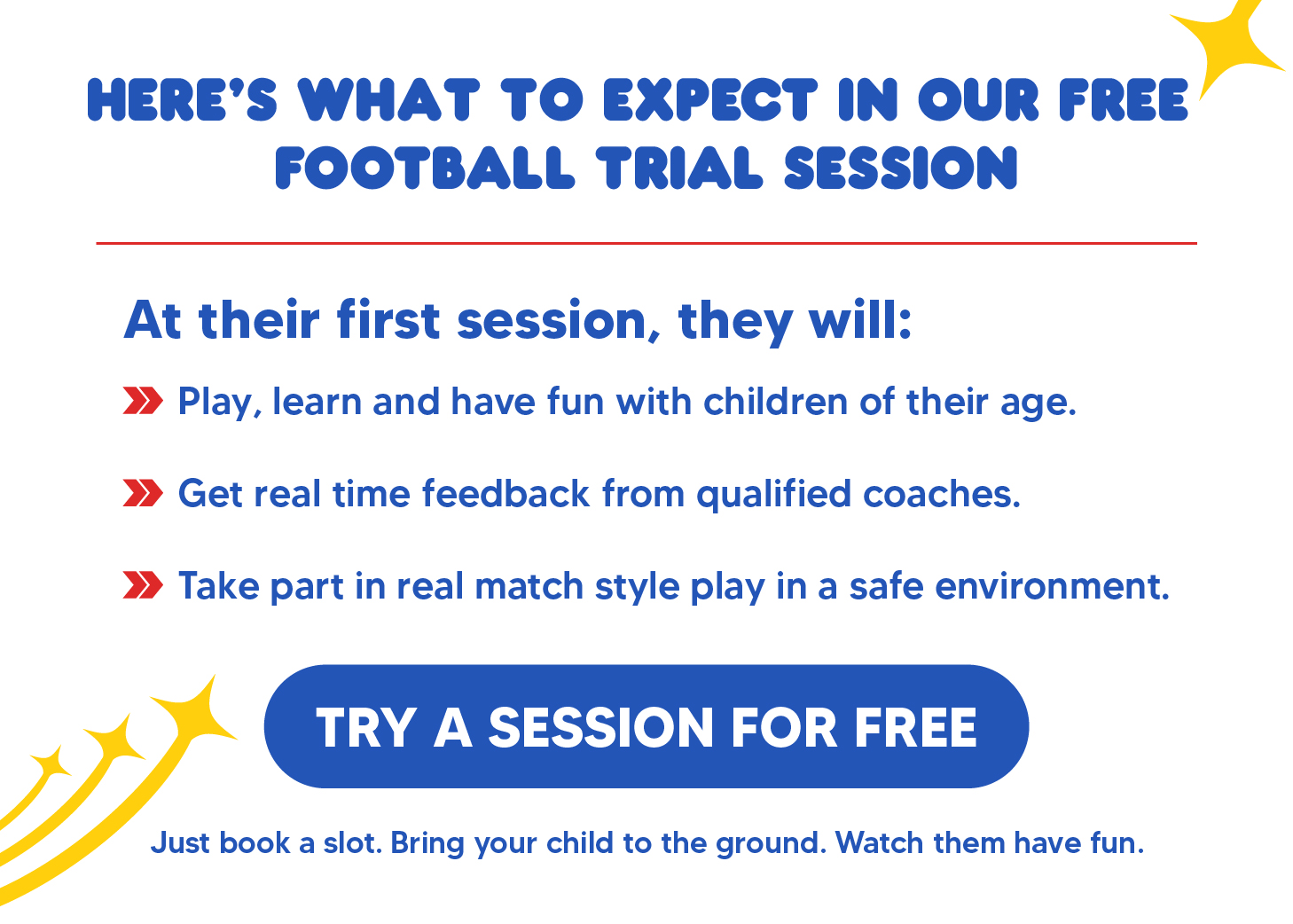
While you support at home, professional coaching can accelerate your child’s football game. BFC Soccer Schools offers expert football coaching in Bengaluru with licensed coaches who focus on both character and football development. Book a free trial class to experience our approach firsthand.
Conclusion
When young footballers know what to work on, how to track progress, and have the support they need at home, they don’t just get better at football. They grow into confident young people who understand how to pursue what they want in life.
That’s what 2026 can be for your child. Not just another year of practice, but the year they learn to set real goals and chase them with purpose.
At BFC Soccer Schools, a grassroots football academy focused on holistic development, we provide structured, age-appropriate football training with licensed coaches who focus on football development and character building. We’ve seen how young players transform when they’re guided properly. This January, start the conversation with your child. Help them set their first SMART goal. Write it down together and create a plan.
Want to see how BFC Soccer Schools can support that journey? We offer a free trial session so your child can experience our training environment before you commit. Get in touch with us to book your free trial and give your child the right foundation for 2026.
Recent Posts
02/06/2026
What Should Your Child Carry to a Football Camp? A Simple Packing Checklist
29/05/2026
How to Prepare Your Child for a Football Trial or Selection Camp
19/05/2026
The ABCD of Receiving the Ball: What Every Young Footballer Needs to Know
Testimonials







FOLLOW US


DOWNLOAD APP


QUICK LINKS
OFFICIAL KIT PARTNER

FOLLOW US
DOWNLOAD APP
GET IN TOUCH
ADDRESS:
Raheja Towers (East), 6th floor, # 26-26, M.G Road, Bangalore, Karnataka, India 560001
Call Us:
